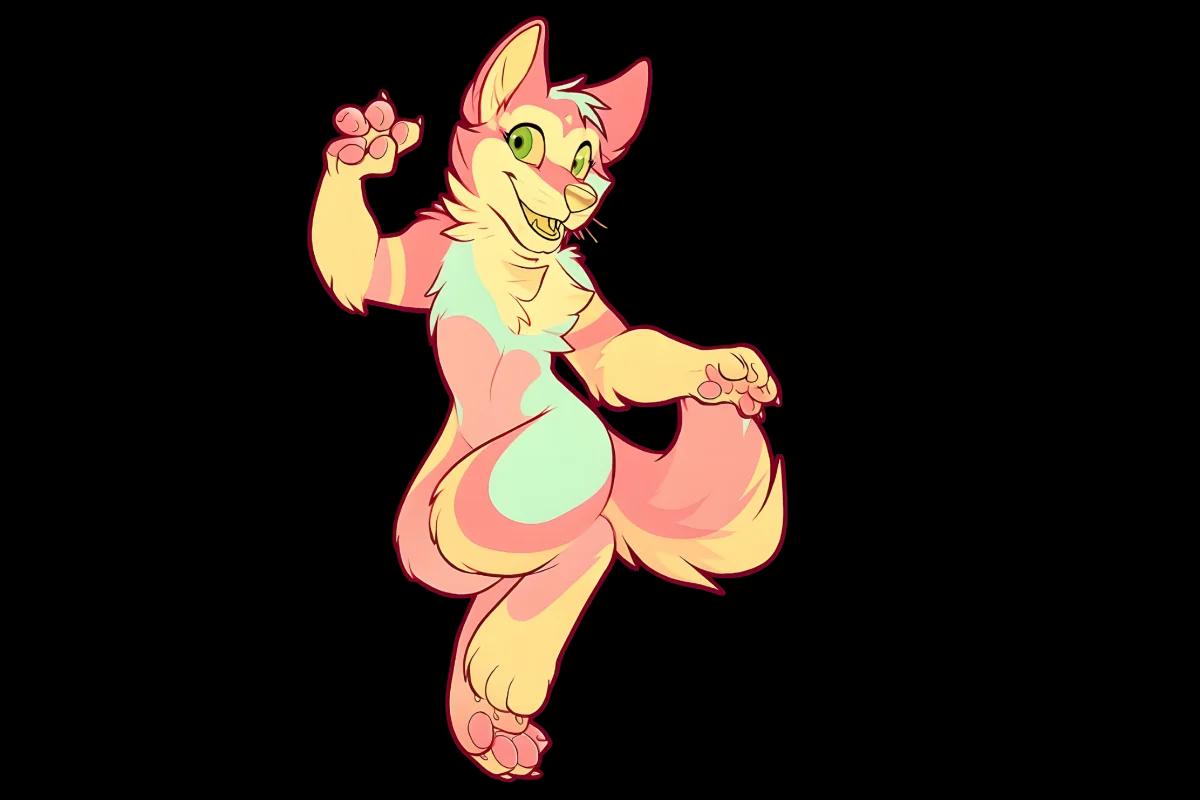
A furry reference sheet is an illustration that documents a character’s visual design. It can show the character’s body shape, fur colors, markings, facial features, accessories, and other defining details.
Reference sheets are useful for keeping your fursona’s appearance consistent across future artwork. They can also help other artists understand your character when you commission additional illustrations.
Ready to order one? See our furry ref sheet commissions.
Depending on the commission, a sheet may include a front view, back view, side view, facial expressions, close-up details, or additional poses. The exact deliverables depend on the artist’s offering and the scope agreed upon before work begins.
Important: A reference sheet is an artwork document, not automatically a 3D model or a physical fursuit. If you need a model for VRChat or a fursuit-maker-ready design, clarify the intended use with the artist before commissioning.Why Commission a Custom Furry Reference Sheet?
A custom reference sheet is especially useful when you want a character design documented around your own ideas rather than relying on a generic template.
Keep Your Design Consistent
Document important colors, markings, proportions, and distinguishing features so they are easier to reference in future artwork.
Share Your Fursona Clearly
Give artists a visual resource that communicates how your character should look.
Document Multiple Views
Use agreed-upon front, back, and side views to make the character’s design easier to understand from different angles.
Prepare for Future Projects
Organize your character details for future illustrations or discuss whether a separate model or costume reference is required.
Which Views Should Your Reference Sheet Include?
The right views depend on how you plan to use your reference sheet. Before ordering, check which views are included in the selected package and whether additional views cost extra.
Front View
A front view helps communicate the character’s facial design, chest markings, torso colors, arm details, legs, and accessories visible from the front.
Back View
A back view can document markings along the spine, back of the head, tail, shoulders, legs, and other features that are not visible from the front.
Side View
A side view can help explain the character’s profile, muzzle shape, body proportions, tail placement, and other details that are difficult to judge from a front-facing illustration alone.
Close-Ups and Additional Details
Depending on your design, you may want close-ups of the eyes, ears, horns, paws, claws, jewelry, clothing, or distinctive markings. Discuss these additions with your artist before confirming the commission.
If your reference sheet will be used by a 3D modeler or fursuit maker, explain that before the artist begins. You may need additional angles, construction details, or a different deliverable from a standard character illustration.
How to Prepare Your Fursona Before Commissioning
You do not need to have every detail perfectly decided before contacting an artist. However, gathering your existing references and identifying your priorities can make the discussion easier.
- Character name and species: Explain whether your fursona is a wolf, fox, dragon, cat, hybrid, or another species.
- Base colors: Identify the main fur, skin, scale, or other relevant colors.
- Markings: Describe stripes, spots, gradients, patches, facial markings, and other recognizable patterns.
- Body proportions: Mention important design characteristics, such as a long tail, large ears, broad shoulders, or a particular silhouette.
- Facial features: Include details about the eyes, muzzle, ears, horns, expressions, and other defining traits.
- Accessories and clothing: Share any required collars, jewelry, clothing, glasses, or props.
- Existing references: Gather sketches, previous artwork, color swatches, or written descriptions that help communicate your design.
- Intended use: Explain whether you need the artwork for personal reference, future commissions, a modeler, or a fursuit project.
If some details are still undecided, list them as flexible rather than presenting them as final requirements. This helps establish what the artist can interpret creatively and what must remain accurate.
What Reference Images Should You Send?
Send material that helps the artist understand your character, rather than collecting images simply because they look attractive.
Existing Character Art
Share previous drawings or reference sheets that show the character’s established appearance.
Color References
Provide color swatches or clearly identified examples when exact colors are important to your design.
Specific Feature References
Use close-up images to explain details such as unusual ears, horns, markings, or accessories.
Written Notes
Explain what each image is meant to communicate and identify which details are essential.
When using inspiration images from other artists, make clear that they are references for specific features or general direction—not a request to reproduce another artist’s work without permission.
How to Plan Your Budget and Commission Scope
The cost of a custom reference sheet depends on the artist’s pricing, the requested views, the complexity of the character, and any additional deliverables. There is no single price that applies to every commission.
Before agreeing to a quote, clarify the following:
- Which views and illustrations are included?
- Are close-ups, expressions, accessories, or extra poses included?
- Are color changes or design revisions part of the agreed scope?
- What is the expected delivery timeframe?
- What payment methods and payment schedule are available?
- What personal or commercial usage rights are included?
- Will you receive a high-resolution final file, and in which format?
If your character has complex markings, multiple outfits, unusual anatomy, or many accessories, mention these requirements when requesting a quote. A clear scope helps both you and the artist understand what is being commissioned.
How to Choose the Right Furry Artist
Review an artist’s portfolio carefully before committing to a commission. Look for examples that demonstrate the type of character artwork and level of detail you need.
Review Relevant Examples
If you need a multi-view reference sheet, look for examples with clearly documented character designs rather than judging the portfolio only by single-pose illustrations.
Read the Commission Terms
Check the artist’s deliverables, pricing structure, revision policy, payment arrangements, and usage terms. Do not assume a feature is included unless it is stated or confirmed.
Communicate Your Requirements
Choose a workflow in which you can explain your priorities, ask relevant questions, and confirm the scope before the artwork begins.
You can explore the MyFurryRefSheet portfolio to review available artwork examples and visit the furry reference sheet service page for more information about commissioning custom character artwork.
What Happens During a Reference Sheet Commission?
Every artist has their own workflow, so confirm the exact process before placing an order. A typical commission discussion may cover these stages:
- Initial inquiry: Share your character information, references, requirements, and budget.
- Scope and quote: Confirm the requested views, deliverables, pricing, payment arrangements, and estimated timeframe.
- Design clarification: Resolve important questions about colors, markings, proportions, and other character details.
- Artwork progress: Follow the artist’s stated process for sketches, previews, or approval checkpoints, if offered.
- Revisions: Request changes according to the agreed revision policy and project scope.
- Final delivery: Receive the agreed final files and confirm that the included deliverables have been provided.
Ask questions about anything unclear before making payment. Written agreement on the scope helps avoid misunderstandings later.
Common Mistakes to Avoid
- Leaving essential details unclear: Identify the features that must match your existing character design.
- Assuming every view is included: Confirm the exact views and extras in the package.
- Providing conflicting references: Explain which reference is the most accurate when images show different versions of your character.
- Ignoring usage rights: Confirm whether your intended personal, commercial, modeling, or costume use is permitted.
- Changing the scope without discussion: Ask about the cost and timing of significant additions before proceeding.
- Confusing artwork with a finished model: A 2D reference sheet does not automatically include a rigged or game-ready 3D avatar.
Can You Use a Furry Reference Sheet for VRChat or a Fursuit?
A reference sheet can be a useful starting point for a future character project, but the requirements depend on the final result you want.
For a VRChat avatar, a 3D modeler may need additional views, technical specifications, and information about how the model will be created and used. A 2D illustration alone is not a finished VRChat avatar.
For a fursuit, a maker may need specific construction references, measurements, material choices, or other details beyond a standard illustration. Ask the intended maker what they require before commissioning artwork for that purpose.
If your goal is specifically a VRChat character, explore the VRChat avatars section and make sure the product or service you select matches the deliverable you need.
Furry Reference Sheet Commission Checklist
Use this checklist before submitting your commission request.
- I have explained my character’s species and main design features.
- I have gathered my existing character artwork and useful references.
- I have identified the views and additional details I need.
- I have explained the intended use of the reference sheet.
- I have shared my budget and any important scheduling requirements.
- I have reviewed the deliverables, revision terms, and usage rights.
- I understand what the quoted price includes.
Ready to Commission Your Furry Reference Sheet?
Give your fursona a clear visual reference that you can use to communicate its design. Before submitting your request, prepare your character details, gather your references, and identify the views you want included.
Visit MyFurryRefSheet to explore the reference sheet service or submit a quote request with your character requirements.
Frequently Asked Questions
What is included in a furry reference sheet?
It depends on the artist and package. A reference sheet may include front, back, and side views, colors, markings, and additional details. Confirm the exact deliverables before ordering.
Do I need a finished fursona design before commissioning?
Not necessarily. You can share your existing ideas and references, then ask the artist whether they can work with an incomplete design or whether additional design work is required.
How much does a custom furry reference sheet cost?
Pricing varies by artist, complexity, number of views, and additional requirements. Request a quote based on your specific character and confirm what the price includes.
Can I use my reference sheet for future art commissions?
A reference sheet is intended to help communicate your character’s design, but you should check the artist’s usage terms and retain the final file for future reference.
Is a furry reference sheet the same as a VRChat avatar?
No. A reference sheet is 2D artwork documenting a character’s appearance. A VRChat avatar is a 3D model with its own technical and compatibility requirements.
What should I include when requesting a quote?
Include your character description, available references, requested views, intended use, budget, and any important deadlines. Mention special features that could affect the scope.
Explore more:
· ·